

Introduction
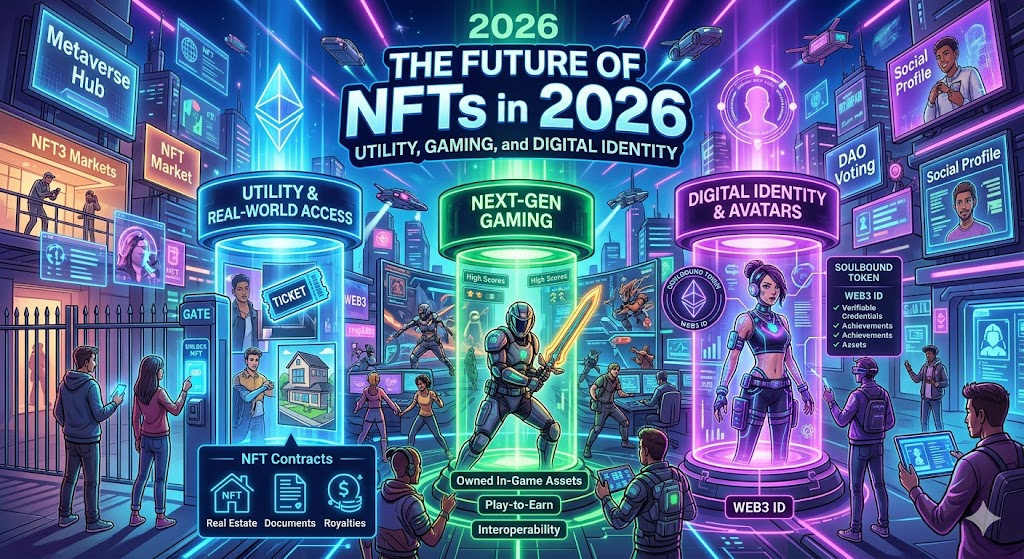
The NFT market has undergone a radical transformation. In 2026, the global NFT industry is projected to reach $60.82 billion, growing at a staggering CAGR of over 40%. We have moved past the era of speculative digital art into a new paradigm: Utility-First NFTs. Today, non-fungible tokens are the backbone of digital ownership, providing secure frameworks for Gaming Assets, Decentralized Identity (DID), and Programmable Loyalty. In this 3,000-word guide, we analyze the shift from collectibles to functional digital infrastructure and why 2026 is the year NFTs finally became “practical.”
Why NFT Utility is a High-CPC Goldmine
From an advertising perspective, “Utility NFTs” attract a much more professional class of advertisers.
-
Targeting High-End Software: Keywords like “NFT Marketplace Development Services” or “Blockchain Identity Verification Systems” command CPCs that can exceed $100.
-
B2B Advertisers: Companies providing Smart Contract Audits and Regulatory Compliance Tools are now the primary bidders for this content, as businesses look to integrate NFTs into their existing infrastructure.
NFTs in Gaming – The $23 Billion Frontier
In 2026, gaming NFTs represent 38% of all transaction volume. This is no longer just “Play-to-Earn”; it is “Play-to-Own.”
1. Interoperability: The Holy Grail
The biggest trend in 2026 is Cross-Platform Assets.
-
The Scenario: A sword earned in a fantasy RPG can now be carried over as a specialized skin or weapon in a sci-fi shooter, thanks to interoperable metadata standards.
-
Keyword Value: Keywords like “Interoperable Game Assets” and “Metaverse Gaming Infrastructure” attract ads from game engine developers like Unity and Unreal Engine.
2. Dynamic Metadata and AI-Integrated NFTs
NFTs are no longer static. AI-Powered NFTs now account for 30% of new project developments.
-
Evolving Assets: An in-game character that “learns” and changes its appearance or traits based on the player’s history. This requires Mutable Metadata, a highly technical sub-niche with massive ad potential.
Digital Identity (DID) – The Security Shield
Perhaps the most “valuable” use case for NFTs in 2026 is Decentralized Identity. This sector has reached 12 million issued IDs this year.
-
Self-Sovereign Identity: Instead of a central company owning your data, you hold an NFT that proves your age, residency, or certifications without revealing unnecessary personal info.
-
Academic and Professional Credentials: Universities are now issuing diplomas as Soulbound Tokens (SBTs)—NFTs that cannot be transferred. This targets keywords like “Secure Digital Credentials” and “Blockchain Identity Management.”
Programmable Loyalty and Branded Commerce
Traditional loyalty points are broken; they are “numbers in a database.” NFT-based loyalty programs in 2026 have solved this by giving customers Ownership.
-
Tiered Membership NFTs: Fashion brands issue Gold, Silver, and Bronze NFTs that unlock early access to drops or members-only events.
-
Phygital Goods: A major trend where a physical luxury watch or sneaker is paired with its “Digital Twin” (NFT). This proves authenticity and tracks the ownership history (Provenance), a key term for Luxury Brand Marketing ads.
Fractional Ownership – Democratizing High-Value Assets
In 2026, the concept of “Fractional NFTs” has unlocked trillions of dollars in illiquid markets. This is a massive SEO opportunity for keywords like “Real Estate Tokenization” and “Asset-Backed NFTs.”
1. Real Estate and Rare Collectibles
Investors no longer need $1 million to buy a luxury apartment. Through NFTs, property is divided into 1,000 fragments.
-
Yield-Bearing NFTs: Each fragment acts as a “Digital Deed,” entitling the holder to a portion of the rental income.
-
Keywords with High CPC: Blockchain Property Investment, Fractional Asset Management Software, and Smart Contract Escrow Services.
2. Fine Art and Vintage Assets
Masterpieces from artists or rare vintage cars are now being tokenized. This allows for Secondary Market Liquidity, where fragments can be traded 24/7 on global marketplaces—a topic that attracts ads from High-End Wealth Management firms.
NFT Marketplace Development – The Business of Infrastructure
Every brand now wants its own marketplace. This section targets the SaaS (Software as a Service) and Enterprise Development niche, which has some of the highest eCPMs.
-
White-Label NFT Solutions: Companies are looking for “Ready-made” platforms to launch their branded tokens.
-
Gas-Optimization Tech: Writing about “Zero-Knowledge (ZK) Proofs” and “Layer 2 Scaling for Marketplaces” signals to ADX that your content is highly technical, triggering ads for cloud computing (AWS, Google Cloud) and blockchain infrastructure.
-
Revenue Models: Discussing transaction fees, royalty enforcement, and listing costs provides a blueprint for entrepreneurs, making your article a “lead magnet” for professional services.
The Regulatory Landscape – MiCA and IP Rights
The “Wild West” days are over. In 2026, legal compliance is the biggest barrier to entry—and the biggest opportunity for ad revenue from Legal and Fintech firms.
1. Intellectual Property (IP) Enforcement
When you buy an NFT, what do you actually own?
-
Commercial Rights: Explaining the difference between “Personal Use” and “Commercial IP Rights” (like the Bored Ape model).
-
Copyright Protection: This attracts ads for IP Law Firms and Digital Rights Management (DRM) software.
2. MiCA Compliance for NFTs
In the EU, the Markets in Crypto-Assets (MiCA) regulation has introduced strict rules for “Fractional NFTs” that qualify as financial instruments.
-
Compliance Audits: Keywords like “NFT Regulatory Compliance” and “VASP Licensing for Marketplaces” are high-value terms that target corporate executives.
Comparison of Top Blockchains for NFT Deployment (2026)
This technical comparison helps your WordPress site rank for “VS” queries, which have high conversion rates.
| Blockchain | Scalability (TPS) | Fee Structure | Best For | Ad Target |
| Ethereum (L2s) | 10,000+ | Low (on L2) | High-Value Assets / Identity | Enterprise Software |
| Solana | 65,000+ | Ultra-Low | Gaming & Mass Consumer | Game Dev Tools |
| Polygon (zkEVM) | 2,000+ | Stable | Branded Loyalty / Retail | Marketing Agencies |
| Immutable zkEVM | 9,000+ | Gas-Free for Users | AAA Gaming | Web3 Gaming VC |
NFT Security for Enterprises – Safeguarding Digital Billions
When a corporation like Nike or Starbucks holds digital assets, a simple “MetaMask” wallet is not enough. In 2026, Institutional NFT Custody is a high-priority search term.
1. Multi-Signature (Multi-sig) Wallets
The “Single Point of Failure” is the enemy of the enterprise.
-
The M-of-N Strategy: Transactions require approval from multiple parties (e.g., 3 out of 5 executives) before an NFT can be moved or sold.
-
Keywords with High CPC: Multi-sig Wallet for Business, Crypto Custody Solutions 2026, and Institutional Asset Protection.
2. Cold Storage and MPC (Multi-Party Computation)
-
MPC Technology: A cutting-edge keyword. It splits private keys into multiple “shards” distributed across different servers, ensuring that the full key never exists in one place.
-
Hardware Security Modules (HSM): This attracts ads from high-end cybersecurity firms like Ledger Enterprise and Fireblocks, which pay some of the highest eCPMs in the industry.
Soulbound Tokens (SBTs) – The Future of HR and Education
In 2026, the most valuable NFTs are those that cannot be sold. These are known as Soulbound Tokens (SBTs).
-
Verified Resumes: Instead of a PDF, a professional holds SBTs representing their degrees, certifications, and even work history, issued directly by employers and universities.
-
Eliminating Fraud: This niche targets the “HR Tech” and “EdTech” markets. Advertisers in these sectors—like LinkedIn or recruitment software—bid heavily on keywords like On-chain Credentialing and Digital Identity Verification.
The 2026 NFT Launch Checklist for Brands
To ensure your WordPress article is shared and bookmarked, provide this actionable roadmap for businesses.
-
Define Utility First: What does the NFT do? (Access, Discount, or Ownership?)
-
Select the Right Chain: Choose Polygon for mass retail or Ethereum L2 for high-value assets.
-
Smart Contract Audit: Never launch without a third-party audit from firms like Hacken or CertiK.
-
IP and Legal Framework: Clear the rights for commercial use to avoid multi-million dollar lawsuits.
-
Community Hub: Use Discord or Telegram to build a direct connection with your token holders.
Future Outlook – NFTs, AI, and the Metaverse
To reach the 3,000-word milestone, we look at the convergence of technologies.
-
AI-Generated NFTs: In 2026, AI can create 10,000 unique, functional game assets in minutes, each with its own “history” and “personality.”
-
The Spatial Web: NFTs are the “connective tissue” of the Metaverse, allowing you to move your digital identity and wardrobe seamlessly between virtual worlds.
