

Introduction
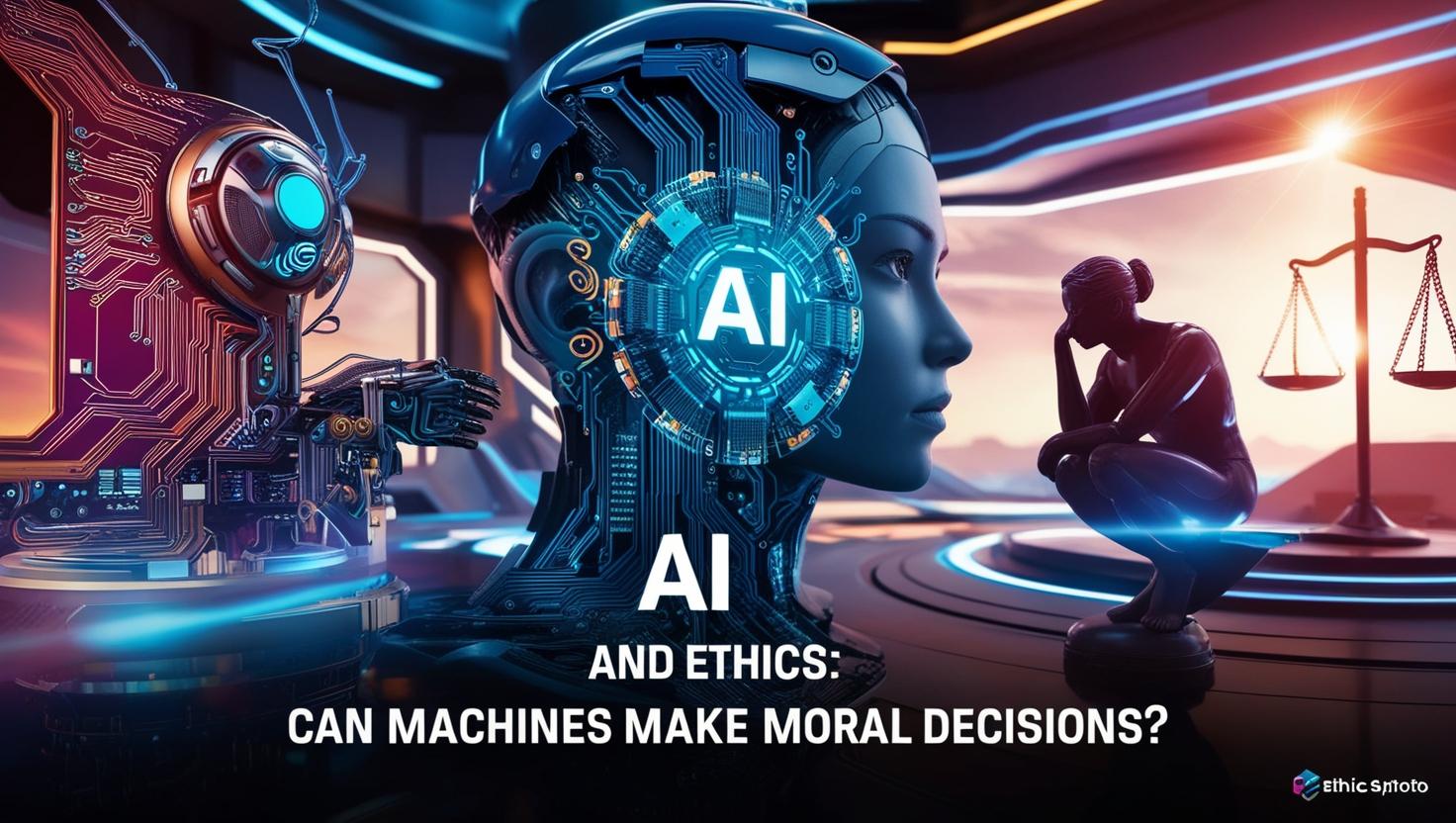
Artificial Intelligence (AI) is advancing rapidly, performing tasks once thought exclusive to human intelligence. From autonomous vehicles to medical diagnostics, AI increasingly influences decisions with ethical implications. This raises a profound question: Can machines make moral decisions?
This article explores the intersection of AI and ethics, examines current technologies, addresses challenges, and considers how society can ensure AI systems act responsibly.
Understanding AI and Moral Decision-Making
AI operates by processing data, recognizing patterns, and executing algorithms. Unlike humans, AI lacks consciousness, emotions, and moral reasoning. Its “decisions” are derived from programmed rules or learned behaviors, raising questions about accountability and fairness.
Key Concepts
-
Ethical AI: Designing systems that align with moral and societal norms
-
Machine Morality: Attempting to program AI to make ethically sound choices
-
Bias and Fairness: Ensuring AI systems avoid reinforcing inequalities
Understanding these concepts is crucial for designing AI that respects ethical boundaries.
Applications of AI with Ethical Implications
AI impacts multiple sectors where decisions have moral consequences.
1. Autonomous Vehicles
-
AI determines split-second decisions in accidents or critical scenarios
-
Ethical dilemmas, such as the trolley problem, challenge AI programming
-
Responsibility for accidents—manufacturer, programmer, or user?
2. Healthcare
-
AI assists in diagnosis, treatment planning, and resource allocation
-
Decisions may affect life and death, raising questions about fairness and transparency
-
Bias in data can lead to unequal treatment among patients
3. Law Enforcement and Security
-
AI predicts crime hotspots, screens applicants, and monitors behavior
-
Ethical concerns include racial profiling, privacy invasion, and wrongful targeting
-
Accountability is unclear if AI decisions lead to harm
4. Finance and Employment
-
AI influences hiring, lending, and resource allocation
-
Bias in algorithms can unfairly disadvantage certain groups
-
Transparency and explainability are critical to maintain trust
Ethical Challenges in AI
AI introduces unique ethical challenges that differ from human decision-making.
1. Bias and Discrimination
-
AI learns from historical data, which may reflect societal biases
-
Biased algorithms can perpetuate inequality in hiring, law enforcement, and healthcare
-
Mitigation requires careful data curation and fairness audits
2. Accountability and Responsibility
-
AI lacks moral agency, so responsibility lies with designers, deployers, or organizations
-
Determining liability in AI-driven harm remains complex
-
Regulatory frameworks are evolving to address accountability gaps
3. Transparency and Explainability
-
AI systems, especially deep learning, are often “black boxes”
-
Stakeholders must understand how decisions are made
-
Explainable AI (XAI) is critical for ethical trustworthiness
4. Autonomy vs. Human Control
-
Fully autonomous AI may make decisions beyond human oversight
-
Maintaining human-in-the-loop systems ensures ethical guidance
-
Balance between efficiency and ethical responsibility is essential
Approaches to Ethical AI
Researchers and organizations are developing frameworks to ensure AI aligns with human values.
1. Value Alignment
-
AI should be designed to reflect societal norms, ethics, and laws
-
Incorporates human oversight to guide moral decision-making
2. Fairness and Bias Mitigation
-
Regular audits to detect and correct algorithmic bias
-
Diverse and representative datasets improve fairness
3. Transparency and Accountability
-
AI systems must provide explanations for their decisions
-
Clear assignment of responsibility for outcomes
4. Collaborative Regulation
-
Governments, businesses, and academia develop ethical AI policies
-
International collaboration ensures AI adheres to global ethical standards
AI and Philosophical Considerations
AI ethics intersects with deep philosophical questions about morality, agency, and responsibility.
Key Questions
-
Can a machine understand human values or moral concepts?
-
Is it ethical to delegate life-impacting decisions to non-conscious entities?
-
How do we define “good” or “fair” outcomes in AI systems?
These questions guide both theoretical research and practical AI development, ensuring technology aligns with human-centric ethical principles.
Real-World Initiatives in Ethical AI
Several organizations are leading efforts to integrate ethics into AI development.
Examples
-
Partnership on AI: Promotes responsible AI deployment
-
IEEE Global Initiative on Ethics of AI: Provides standards and guidelines
-
European Union AI Act: Establishes legal requirements for high-risk AI systems
-
AI Ethics Boards: Companies implement internal oversight to monitor AI decisions
Impact: These initiatives foster transparency, accountability, and ethical alignment in AI deployment.
The Future of AI Ethics
As AI becomes more integrated into society, ethical governance will be critical to sustainable adoption.
Emerging Trends
-
Human-AI Collaboration: Humans retain oversight for morally sensitive decisions
-
Ethical AI Standards: Global norms and regulations guide AI development
-
Explainable and Transparent AI: Systems designed for accountability and interpretability
-
Societal Engagement: Public input informs AI ethics policies, ensuring alignment with cultural and social values
The future of AI depends on responsible innovation, balancing technological advancement with moral responsibility.
Conclusion
Artificial Intelligence challenges traditional notions of ethics and moral decision-making. While AI lacks consciousness, its influence on life-critical decisions requires careful oversight, transparency, and accountability.
By integrating ethical frameworks, mitigating bias, and maintaining human involvement, society can ensure AI enhances human well-being without compromising moral values. The future of AI will depend not just on technological progress, but on our ability to embed ethical principles into every layer of AI development and deployment.
