

Introduction
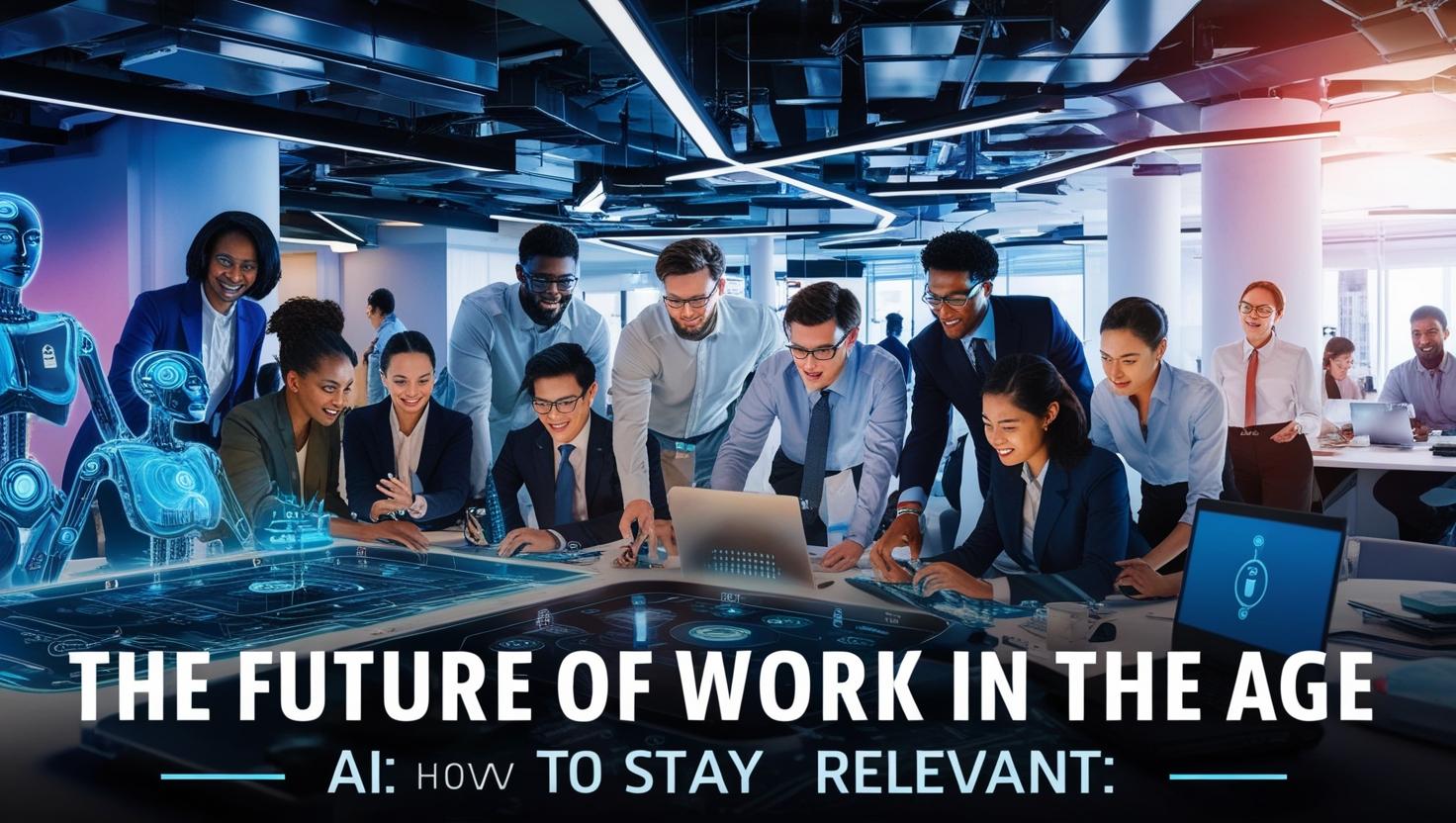
Artificial Intelligence (AI) is reshaping the global workforce at an unprecedented pace. From automating repetitive tasks to enabling entirely new professions, AI is transforming how, where, and why people work.
This transformation prompts a critical question: how can individuals and organizations stay relevant in an AI-driven job market?
In this article, we explore the future of work in the age of AI, identifying trends, challenges, opportunities, and actionable strategies to adapt and thrive.
AI as a Workforce Transformer
AI is not just a tool; it is a catalyst for redefining job roles and industry standards.
Key Areas of Transformation
-
Automation of routine tasks: Freeing humans from repetitive or mundane work
-
Enhanced decision-making: AI provides data-driven insights for better strategies
-
Creation of new roles: Emerging AI-focused professions are shaping the labor market
-
Hybrid human-AI collaboration: AI augments human skills rather than replaces them entirely
AI’s integration into the workforce is both disruptive and empowering, creating opportunities for those prepared to adapt.
Jobs Most Impacted by AI
Certain sectors and roles face more significant AI disruption due to predictable workflows and repetitive tasks.
High-Risk Job Categories
-
Administrative and clerical work: Automated scheduling, document processing, and reporting
-
Manufacturing and assembly: Robotics and smart automation replace repetitive production tasks
-
Customer service: Chatbots and AI-driven support reduce the need for traditional call centers
-
Transportation and logistics: Autonomous vehicles and drones increasingly handle delivery tasks
While some roles are displaced, AI also creates room for workers to focus on strategic, creative, and human-centered tasks.
Emerging Opportunities in the AI Era
AI is simultaneously creating high-demand roles that did not exist a decade ago.
Examples of Growing Roles
-
AI and Machine Learning Engineers: Design, train, and maintain AI systems
-
Data Analysts and Scientists: Transform AI outputs into actionable insights
-
Cybersecurity Specialists: Protect systems from AI-driven threats
-
Digital Transformation Consultants: Guide organizations through AI integration
-
Human-AI Interaction Designers: Ensure AI systems are user-friendly and ethical
These roles emphasize skills humans excel at, such as creativity, judgment, and complex problem-solving.
How Workers Can Stay Relevant
Adapting to AI is essential for career longevity. Key strategies include:
Continuous Learning
-
Enroll in online courses and certifications
-
Stay updated on AI tools and industry trends
-
Develop skills in data literacy, digital communication, and advanced technologies
Flexibility and Adaptability
-
Embrace hybrid work environments
-
Be open to cross-functional roles
-
Learn to collaborate effectively with AI systems
Cultivating Human-Centric Skills
-
Critical thinking and problem-solving
-
Creativity and innovation
-
Emotional intelligence and interpersonal communication
AI may automate repetitive work, but human judgment and creativity remain irreplaceable.
The Role of Organizations
Businesses must prepare their workforce for AI adoption to maximize benefits and minimize disruption.
Key Organizational Strategies
-
Reskilling and Upskilling Programs: Train employees to handle AI-augmented tasks
-
Ethical AI Deployment: Ensure AI systems are transparent, fair, and unbiased
-
Cultural Adaptation: Promote a growth mindset and adaptability among teams
-
Collaborative Work Models: Encourage human-AI collaboration rather than replacement
Organizations that proactively plan for AI adoption gain a competitive advantage in both efficiency and innovation.
Case Studies: AI in the Workplace
Manufacturing
Companies like Siemens and General Electric use AI-powered robotics for production. Workers transition to supervisory, analytical, and maintenance roles, focusing on creative problem-solving and optimization.
Healthcare
AI assists doctors in diagnostics, workflow automation, and patient monitoring. Human expertise remains central for complex decision-making and patient care.
Finance
Banks use AI for fraud detection and predictive analytics, while human employees handle high-level decision-making, strategy, and client relationships.
Ethical Considerations
As AI reshapes the workforce, ethical concerns must be addressed:
Job Displacement vs. Opportunity
-
Governments and organizations must ensure fair access to training and job transitions
-
Policies for social safety nets and lifelong learning are critical
Data Privacy and Surveillance
-
AI systems often rely on employee and customer data
-
Transparent policies and responsible AI governance are essential to maintain trust
Preparing for the Future
The future of work in the age of AI is less about fear and more about preparation.
Practical Steps for Individuals
-
Upskill and Reskill: Gain AI-related competencies
-
Network Strategically: Connect with industry professionals and thought leaders
-
Stay Informed: Follow AI trends, innovations, and workplace shifts
-
Embrace Lifelong Learning: Adapt continuously as technology evolves
Practical Steps for Organizations
-
Implement AI Thoughtfully: Align automation with human skill enhancement
-
Foster Innovation: Encourage employees to experiment and collaborate with AI tools
-
Invest in Human Capital: Prioritize employee growth alongside technological investment
Conclusion
Artificial Intelligence is transforming work at every level, from the smallest tasks to strategic decision-making. While some jobs will inevitably change or be automated, AI also opens doors for new careers, innovative workflows, and unprecedented productivity.
The key to thriving in the AI-driven workplace lies in adaptation, continuous learning, and ethical integration of AI. Workers and organizations that embrace these principles will not only survive but flourish, ensuring that technology amplifies human potential rather than replaces it.
