

Introduction
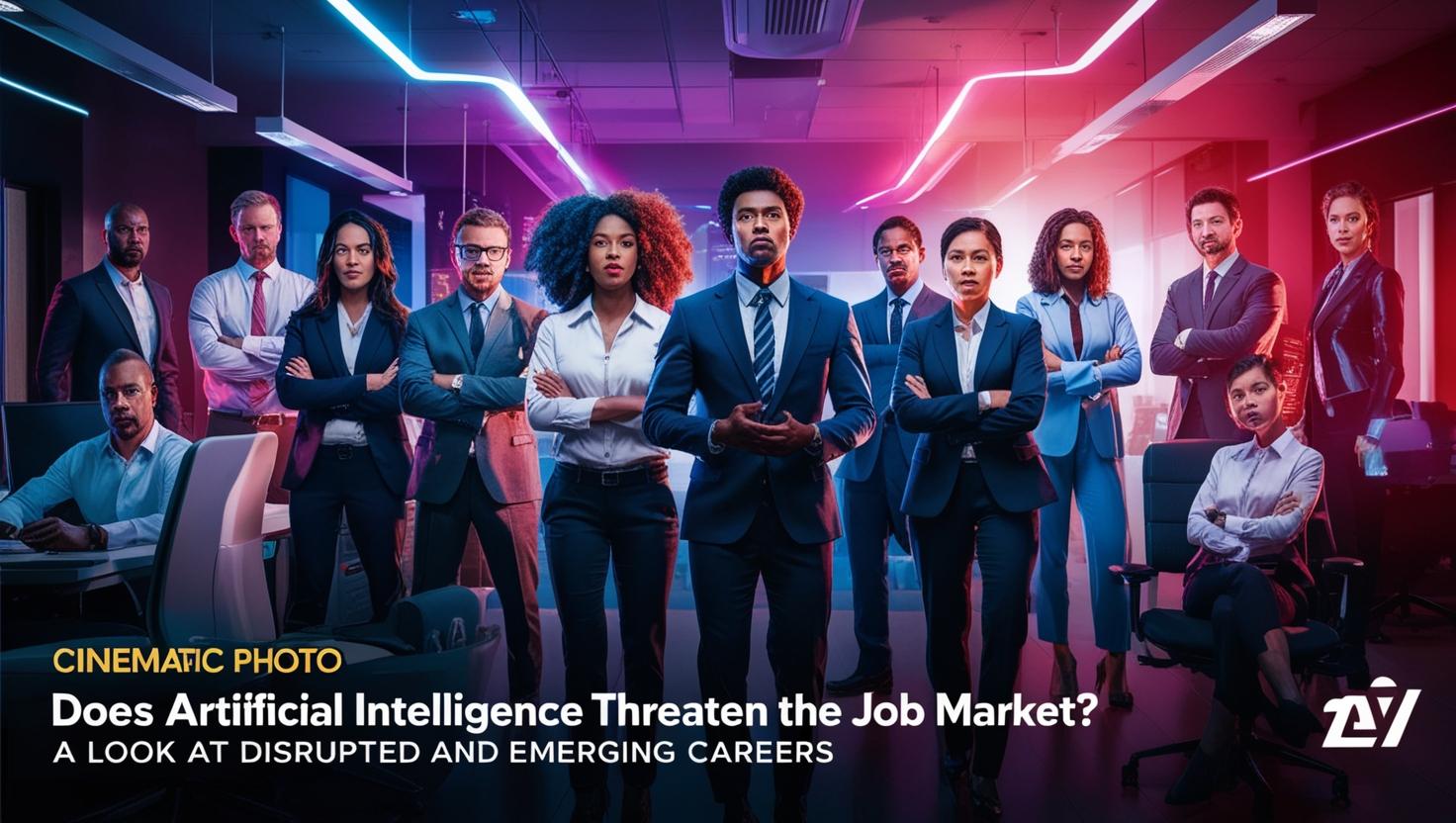
Artificial Intelligence (AI) has rapidly evolved from a futuristic concept to a practical reality in workplaces worldwide. While AI promises unparalleled efficiency, automation, and innovation, it also raises a pressing concern: will AI replace human jobs?
This article delves into the multifaceted impact of AI on employment, analyzing which jobs are most at risk, which roles are emerging, and how individuals and organizations can adapt to an AI-driven economy.
Understanding AI and Automation
Artificial Intelligence refers to systems capable of performing tasks that typically require human intelligence, including decision-making, problem-solving, and pattern recognition.
Automation powered by AI includes:
-
Robotic Process Automation (RPA): Repetitive administrative and data tasks
-
Predictive Algorithms: Financial forecasting, inventory planning
-
Machine Learning Models: Customer behavior prediction, automated recommendations
These technologies can significantly increase productivity but may also disrupt traditional job structures.
Jobs Most at Risk
Certain sectors and roles are more vulnerable to AI-driven disruption. Jobs that involve routine, repetitive, and predictable tasks are particularly susceptible.
Examples of At-Risk Roles
-
Manufacturing and assembly line workers: Automation can replace repetitive mechanical tasks.
-
Data entry clerks: AI algorithms can process and input data faster than humans.
-
Customer service representatives: Chatbots and virtual assistants are handling increasing volumes of inquiries.
-
Transportation and delivery drivers: Autonomous vehicles and drones are gradually entering commercial operations.
According to McKinsey & Company (2024), up to 30% of existing tasks could be automated by 2030, especially in administrative, production, and service sectors.
Jobs That Are Safe or Growing
While some roles are at risk, AI is also creating new opportunities and transforming existing ones. Jobs requiring creativity, emotional intelligence, complex problem-solving, and human judgment remain less vulnerable.
Emerging Job Categories
-
AI Specialists and Machine Learning Engineers – designing, training, and maintaining AI systems
-
Data Analysts and Scientists – interpreting AI outputs and providing actionable insights
-
Cybersecurity Experts – protecting systems against AI-driven threats
-
Digital Transformation Consultants – helping organizations integrate AI responsibly
-
Human-AI Interaction Designers – ensuring user-friendly interfaces for AI applications
The World Economic Forum predicts that by 2030, AI-related job creation may outpace job displacement, particularly in tech-savvy industries.
AI as a Job Enhancer
Rather than outright replacement, AI often acts as an augmenter—enhancing human capabilities rather than eliminating them.
Examples of Augmentation
-
Healthcare: AI assists doctors in diagnostics, allowing more accurate and faster patient care.
-
Finance: AI evaluates investment strategies, but humans make final strategic decisions.
-
Education: Adaptive learning platforms help teachers tailor lessons while maintaining human guidance.
By taking over repetitive tasks, AI allows workers to focus on strategic, creative, and interpersonal responsibilities.
Ethical and Social Implications
The rise of AI in the job market is not only a technical issue but also a social and ethical challenge.
Inequality and Workforce Displacement
-
Workers in low-skill jobs face higher risk of unemployment.
-
AI-driven inequality may exacerbate wealth gaps if benefits are concentrated among skilled professionals and organizations.
Responsibility of Employers
-
Companies must reskill and upskill employees to adapt to AI-driven changes.
-
Governments and institutions may need policies for job transition support and lifelong learning programs.
Preparing the Workforce for AI
Individuals and organizations must proactively adapt to the AI era to mitigate risks and capitalize on opportunities.
For Employees
-
Continuous Learning: Upskilling in digital literacy, AI fundamentals, and emerging technologies
-
Flexibility: Ability to work in hybrid human-AI teams
-
Creativity and Critical Thinking: Skills that AI cannot easily replicate
For Employers
-
Reskilling Programs: Train employees for AI-augmented roles
-
Ethical AI Deployment: Ensure AI adoption does not unfairly displace workers
-
Change Management: Foster a culture of adaptability and continuous improvement
Case Studies
Manufacturing Transformation
Companies like Tesla and Siemens are implementing AI-powered robotics. Production efficiency skyrockets, but human workers transition to supervisory, technical, and quality assurance roles.
Customer Service Evolution
Large companies such as Amazon and Microsoft use AI chatbots to handle routine inquiries, while human representatives tackle complex, nuanced customer issues.
Healthcare Advancements
AI tools in radiology and diagnostics enhance physician accuracy. Human judgment remains critical for treatment planning, ensuring collaborative human-AI interaction.
Global Outlook
-
OECD 2024 Report: AI adoption will displace some jobs but create even more in AI-related fields.
-
IMF 2024 Forecast: Nations investing in AI education and digital infrastructure are more likely to benefit economically while mitigating social disruption.
The consensus: AI is not inherently destructive; the approach to adoption and workforce planning will determine the outcomes.
Conclusion
Artificial Intelligence represents both a challenge and an opportunity for the global job market. While certain routine tasks may be automated, new roles, skills, and industries are emerging.
Success in the AI era will depend on:
-
Adaptability: Individuals embracing lifelong learning
-
Responsible AI Adoption: Organizations deploying AI ethically
-
Collaboration: Humans and AI working together to achieve better results
By understanding AI’s impact and preparing accordingly, the workforce can thrive rather than be displaced, ensuring that AI serves as a catalyst for growth, innovation, and human potential.
